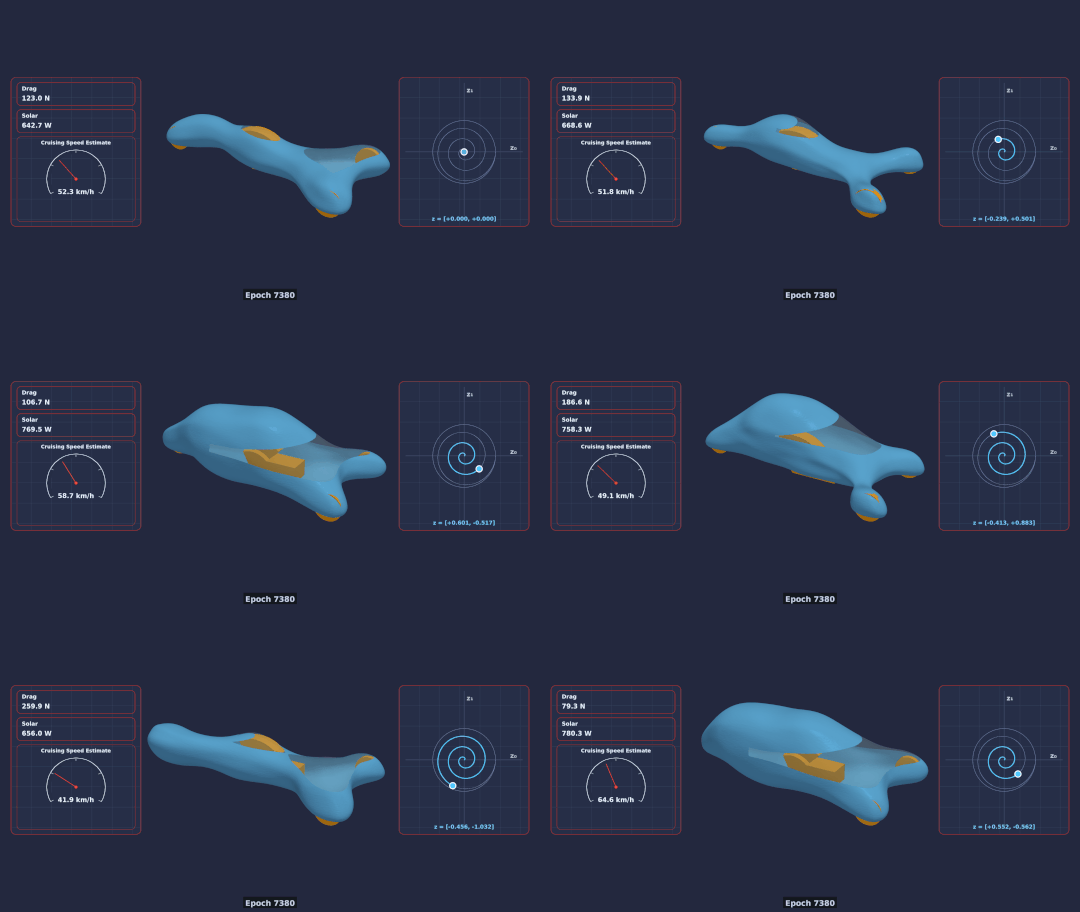
AISCO - Artificial Intelligence for Solar Car Optimisation - revolutionizes the design process of solar race cars.
AISCO accelerates the car design process by exploring a diverse range of aeroshells, estimating their drag and solar performance to finally rank generated aeroshell concepts by minimal racetime.
AISCO predicts aerodynamic drag using a self-built CFD-AI, dynamically balancing the trade-off with solar power input while respecting street-legal regulations
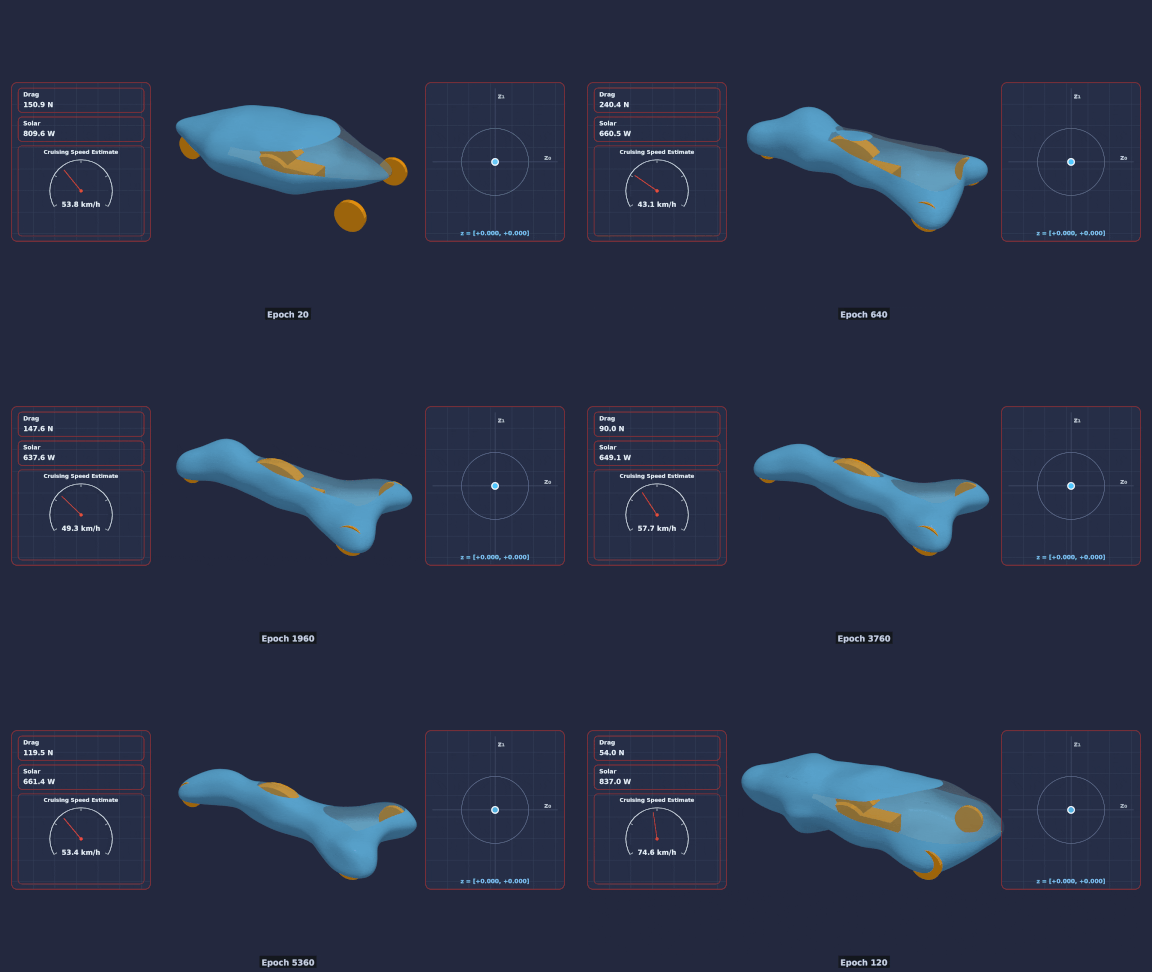
Our vision is to explore a variety of new aeroshell designs. The optimizer maximizes performance by minimizing a cost function consisting of multiple weighted losses, ranging from aerodynamic performance to solar power efficiency. Provided that we weight each loss separately, we can generate entirely new aeroshell forms. Finally, we provide a ranking of designs by minimal race time to drastically accelerate our team's exploration process.
The Aeroshell Optimiser Architecture is based on Geomertry Informed Neural Networks and Wavelet Implicit Neural Representations.
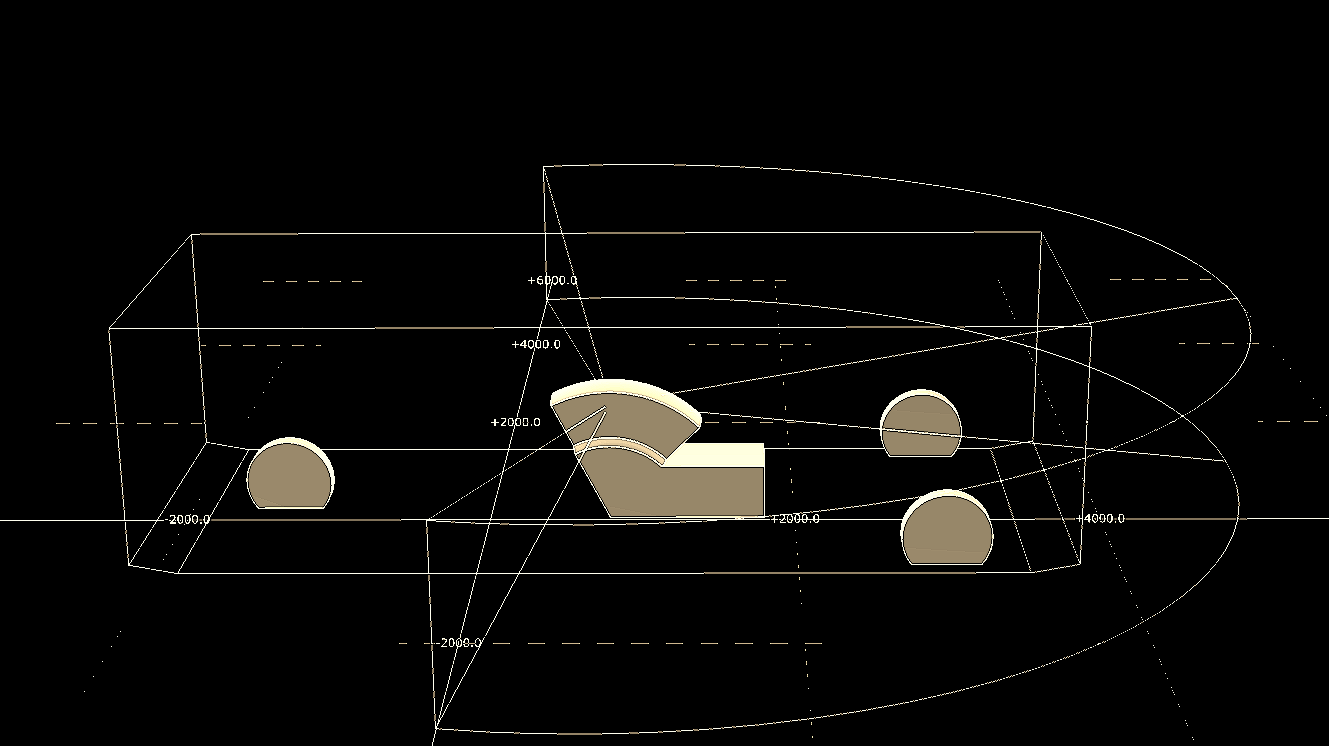
The assembler bridges engineering constraints and AI-driven design. Our aeroshell must fit within precise spatial boundaries, including World Solar Challenge regulations (like vision standards) and internal physical components (like the battery pack). The assembler takes these regulations as inputs and intelligently positions components, transforming abstract constraints into buildable, compliant geometry.
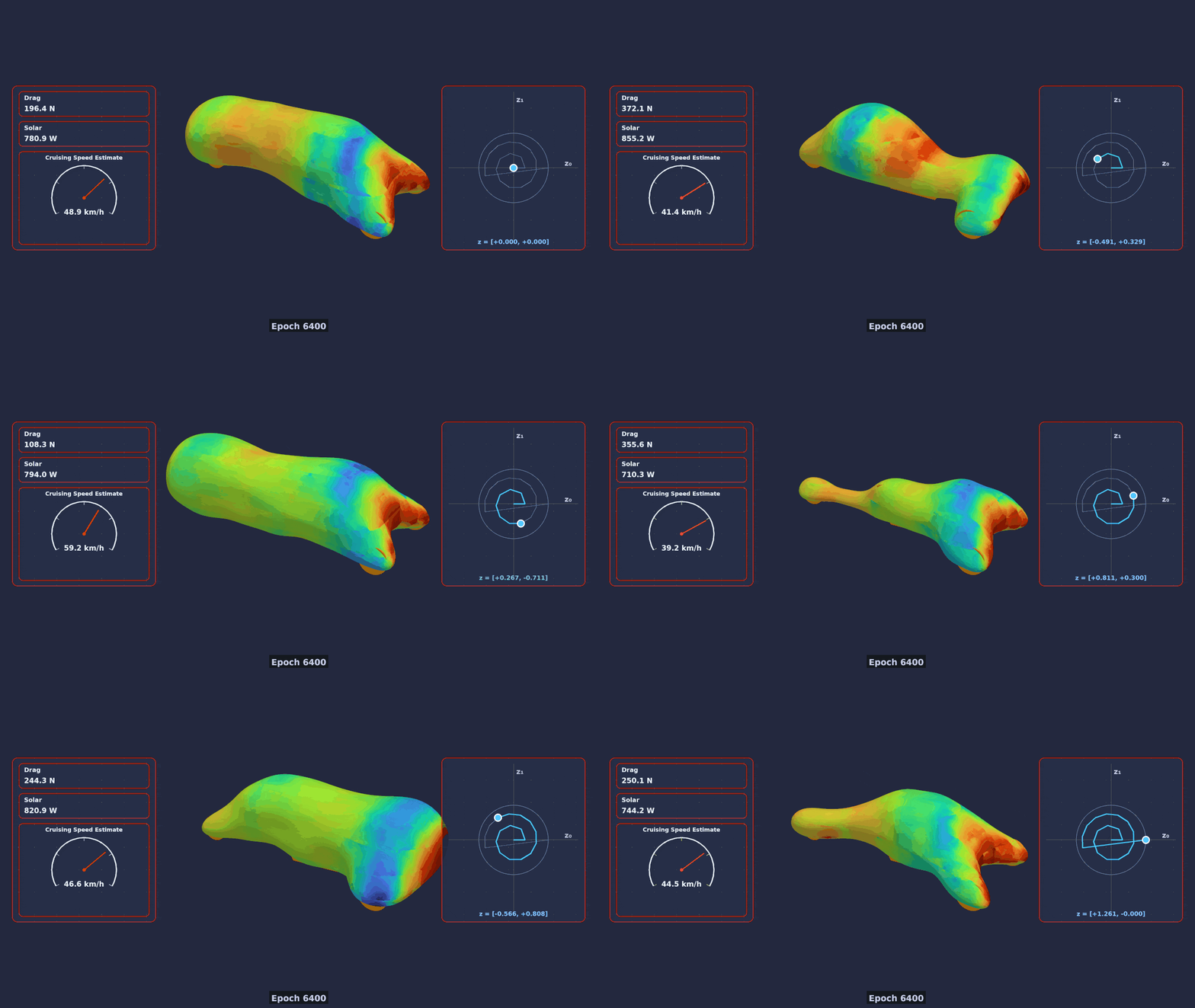
High-fidelity Reynolds-averaged Navier Stokes simulations are computationally intensive, often taking hours to converge on a single design. This bottleneck makes it impractical to iterate through the many geometries required for optimal aerodynamic performance. To overcome this, we utilize Deep Learning to build surrogate models. Instead of iteratively solving flow equations, our AI predicts the aerodynamic drag nearly instantaneously based on vehicle geometry. The prediction is integrated directly into our aeroshell optimizer as a loss function. This creates a rapid feedback loop where designs are evaluated extremely quickly.
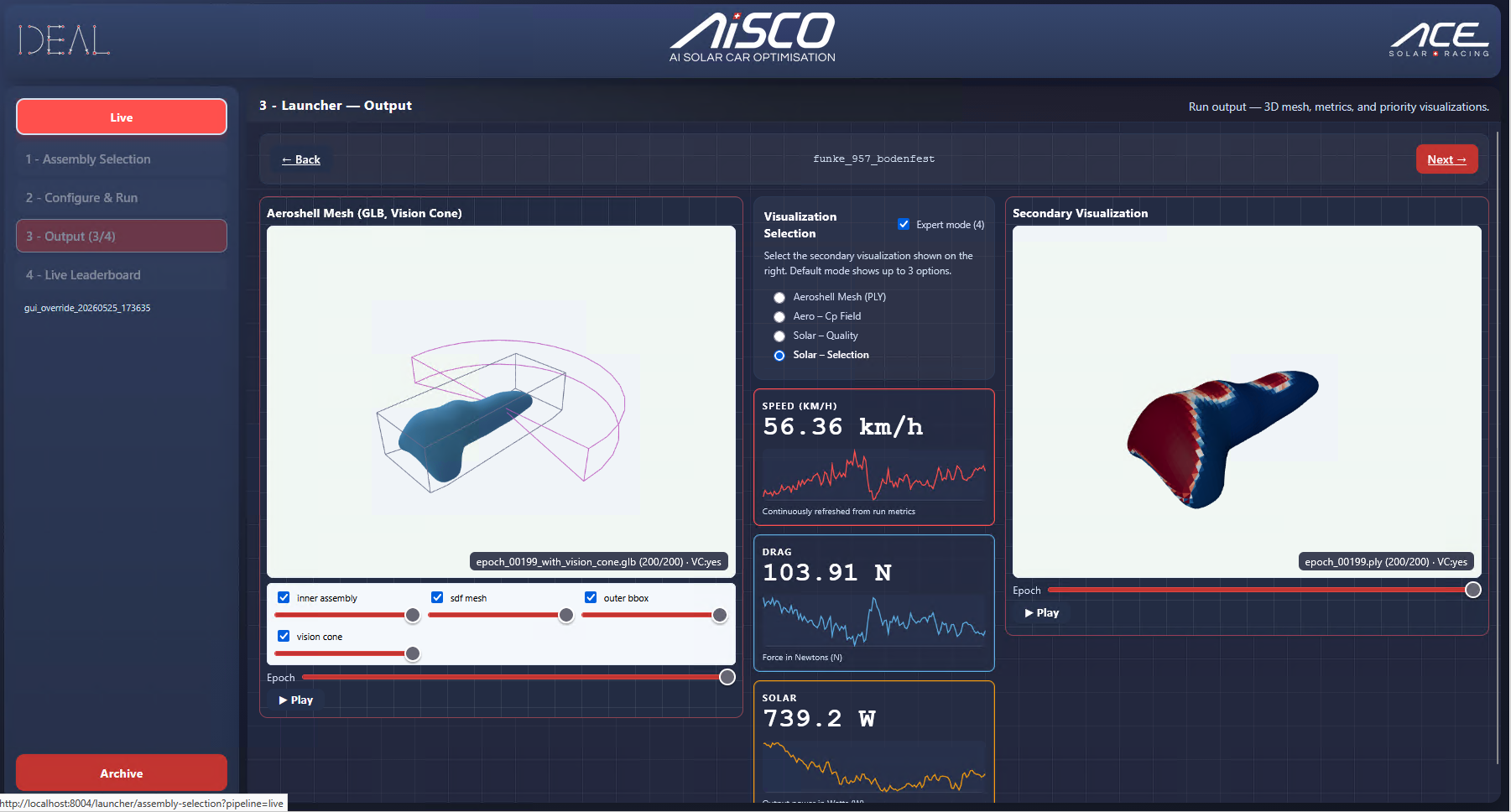
We want users of our aeroshell optimization model to remain in full control of their engineering designs. To achieve this, we are developing an intuitive Graphical User Interface (GUI) that allows team members to easily adjust specific constraints, weights, and race regulations. This interactive control panel will be particularly relevant and impactful for our upcoming Focus Rollout.
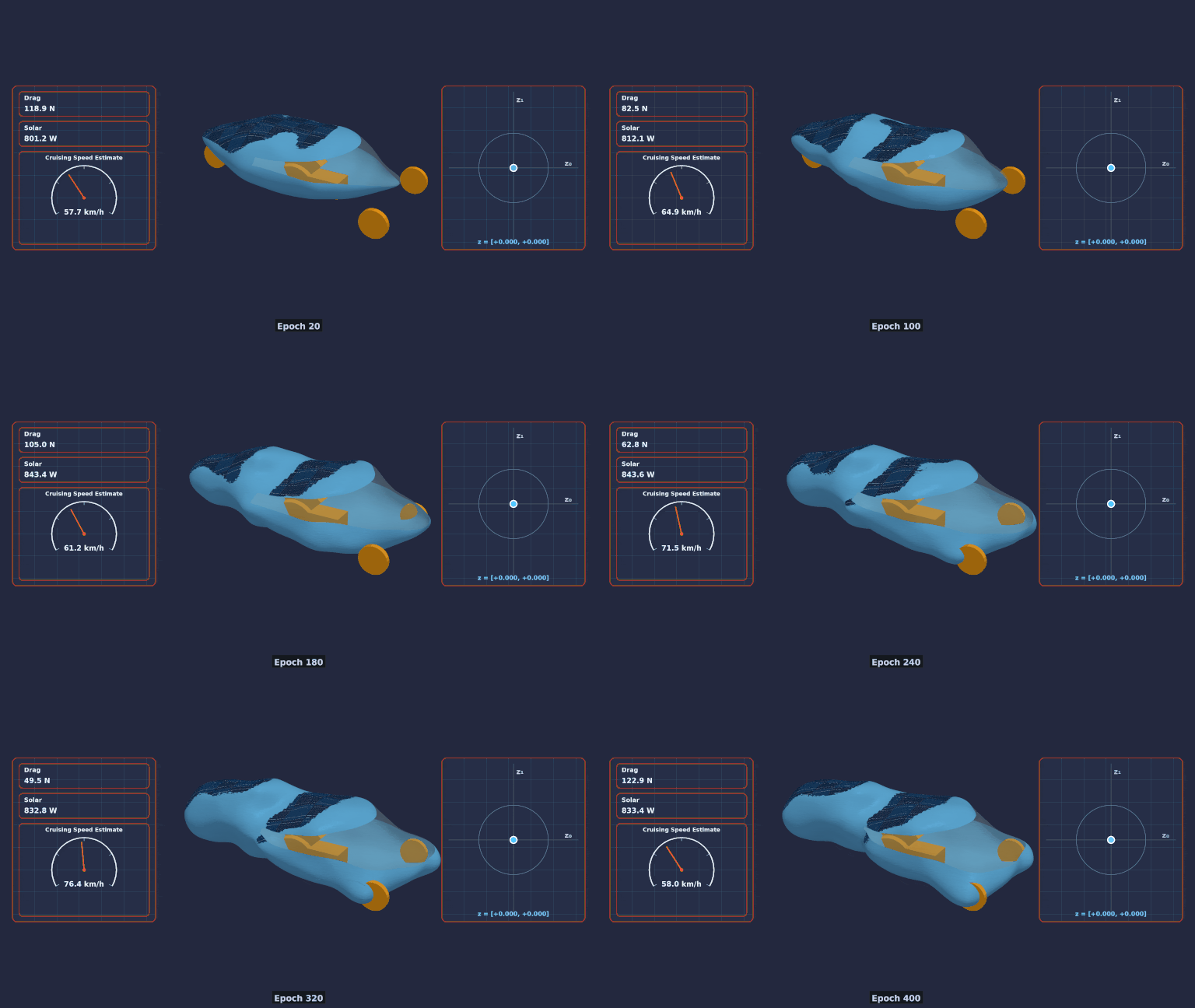
Solar power input depends on factors like incidence angle, weather, deck incline, cell placement, and string arrangement. Almost all of these factors are directly dependent on the geometry of the aeroshell itself. To maximize efficiency, we model these variables and feed the estimated solar power back into the main aeroshell optimizer as a core loss function, ensuring energy generation is prioritized.
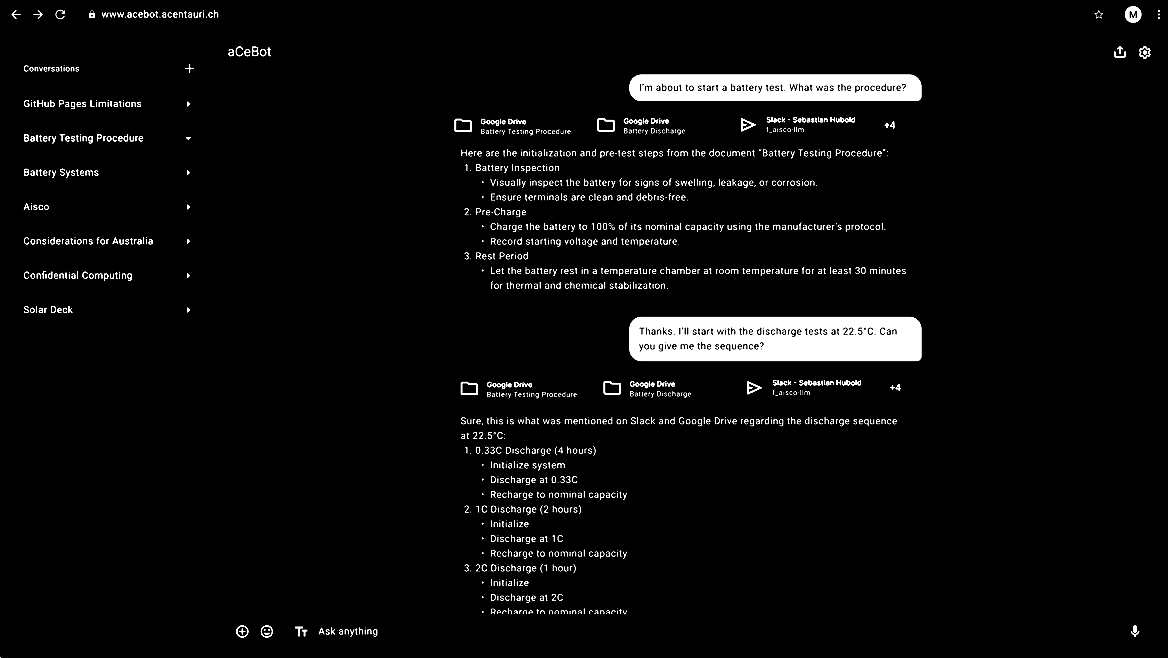
As a student-led team with over four years of racing history, managing member turnover and knowledge transfer is critical to our long-term success. To address this, we are developing an internal knowledge tool called aCeBot. This Large Language Model is trained on our internal documentation, chats, and project history to provide fast, structured access to information and prevent repeating past mistakes.
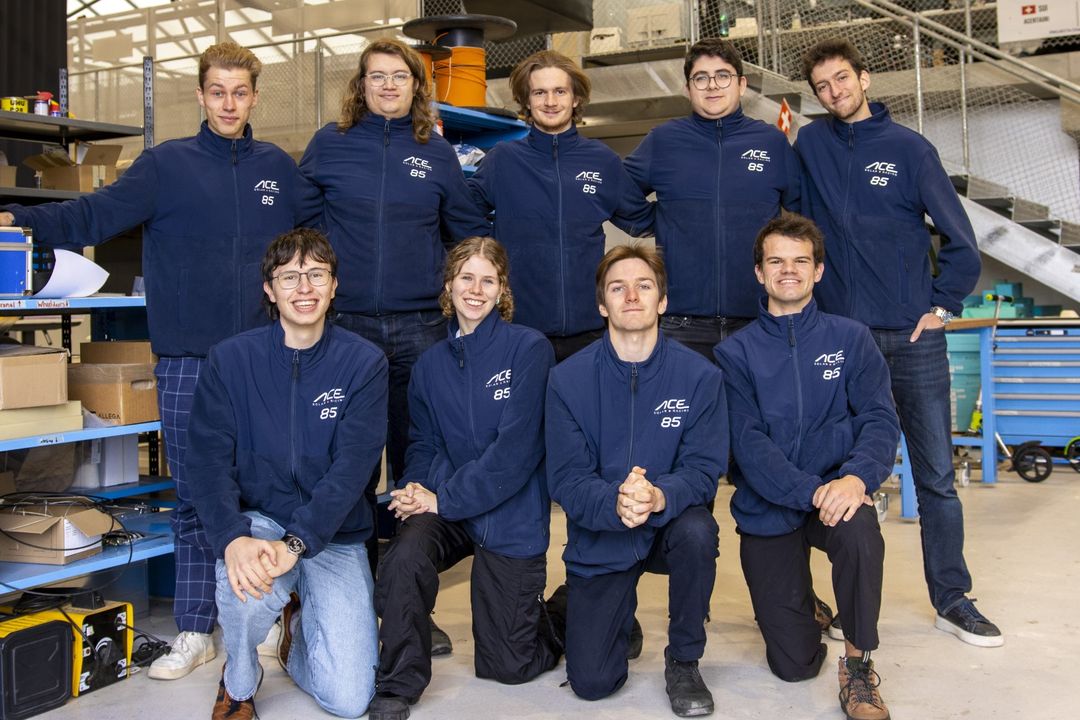
Back Row (L-R): Emanuel Schärer, Clemens Huber, Kolja Diehl, Robin Arnold, Federico Sanchez
Front Row (L-R): Elias Huber, Tippi Engel, Alex Althaus, Victor Diekmann
The AISCO team consists of 9 ETH Focus Students and 9 Freelancers. The LLM team operates as an independent subsidiary led entirely by Freelancers, while the AISCO Focus Project is driven by Focus Students with support from Freelancers and under supervision of Prof. Fuge’s IDEAL Lab.
GET TO KNOW US
Institute for Design, Engineering and Learning
Promoting information and communications technology (ICT) for the well-being and benefit of Switzerland.
Department of Mechanical and Process Engineering,
Sustainability Fund